 nom

In short
The NHS describes the Ehlers-Danlos syndromes as inherited conditions that affect connective tissue, often with tiredness and digestive problems. There is no special EDS diet. What makes eating easier is method: low effort recipes, batch cooking on better days, a freezer of single portions and a plan that leaves room for rest.
What EDS is
The NHS describes Ehlers-Danlos syndromes as a group of rare inherited conditions that affect connective tissue, which supports skin, tendons, ligaments, blood vessels, organs and bones. There are 13 types, and hypermobile EDS is the most common. People with hypermobile EDS may have joint hypermobility, extreme tiredness, skin that bruises easily, digestive problems such as heartburn and constipation, and dizziness and an increased heart rate after standing up.
The NHS says there are currently no tests to confirm that someone has hypermobile EDS, and that the diagnosis is made from a medical history and a physical examination. It also says there is no specific treatment for EDS, but that many symptoms can be managed with support and advice, including from a physiotherapist and an occupational therapist.
The Ehlers-Danlos Society describes the same conditions as heritable connective tissue disorders, and notes that other problems such as fatigue, headaches, gut problems and autonomic dysfunction are often seen in hypermobility spectrum disorder. Two organisations describing the same picture is a reassuring place to start.
Cooking on low energy days
The NHS says that if fatigue is a problem, people can be taught ways to conserve energy and pace their activities. The NHS page on joint hypermobility syndrome makes the same point in plainer terms: take regular breaks rather than doing repetitive activity, and start with low impact exercise such as swimming or cycling if you have not been active before.
Pacing a kitchen is the same skill as pacing a day. Sit down to chop. Use pre chopped vegetables. Put the things you use every day at the front of the cupboard. Cook once and eat twice, with the extra portion straight into the freezer.
The British Dietetic Association say that making larger quantities of meals and storing portions in the fridge or freezer saves time and money, and that bread and baked products freeze very well. A loaf that you can toast from frozen is a low energy meal on a day when even a pan feels like too much.
Keeping the gut and the day steady
The NHS lists digestive problems among the features of hypermobile EDS, and the Ehlers-Danlos Society lists gut problems among those often seen in hypermobility spectrum disorder. Neither organisation sets out a single diet for EDS, and neither says that a change of food will settle the gut.
What tends to help is ordinary: regular meals, enough fluid through the day, and enough variety to keep eating something you like. The NHS Eatwell Guide says you do not need the balance right at every meal, only over a day or a week, which is useful when a single meal is hard.
Shopping is often the harder part. One list built from your plan, grouped by aisle, scaled to the servings you actually need, means fewer decisions in the shop and fewer things carried home that you will not eat.
Who else can help
The NHS says a GP may refer you to a rheumatologist if they suspect EDS, and to a genetics service where one of the rarer types is possible. It also says people with EDS may benefit from support from a number of healthcare professionals, such as a physiotherapist who can teach exercises to strengthen joints and avoid injury, and an occupational therapist who can advise on equipment and daily activities.
If food is part of what is going on, a registered dietitian is the person to ask for a plan that fits your diagnosis rather than a plan that fits the internet. The British Dietetic Association says its fact sheets are intended for information only, and are not a substitute for medical diagnosis or dietary advice given by a dietitian.
Nomeriu is not medical advice and cannot tell you how EDS affects you. Talk to your GP or your own team about your situation, particularly before you change what you eat in a big way.
Questions
Is there an EDS diet?
Neither the NHS nor the Ehlers-Danlos Society sets out a special diet for EDS. Talk to your GP or a dietitian about your own needs, especially if gut symptoms are part of the picture.
Sources
- NHS: Ehlers-Danlos syndromes The types, the symptoms of hypermobile EDS, how it is diagnosed and the professional support the NHS lists.
- The Ehlers-Danlos Society Their description of EDS and of the fatigue, gut and autonomic symptoms often seen with hypermobility.
- NHS: Joint hypermobility syndrome Pacing, regular breaks, low impact activity and the links with tiredness and bladder or bowel problems.
- BDA: Batch cooking and freezing food Cooking in batches, labelling, freezing and what freezes well.
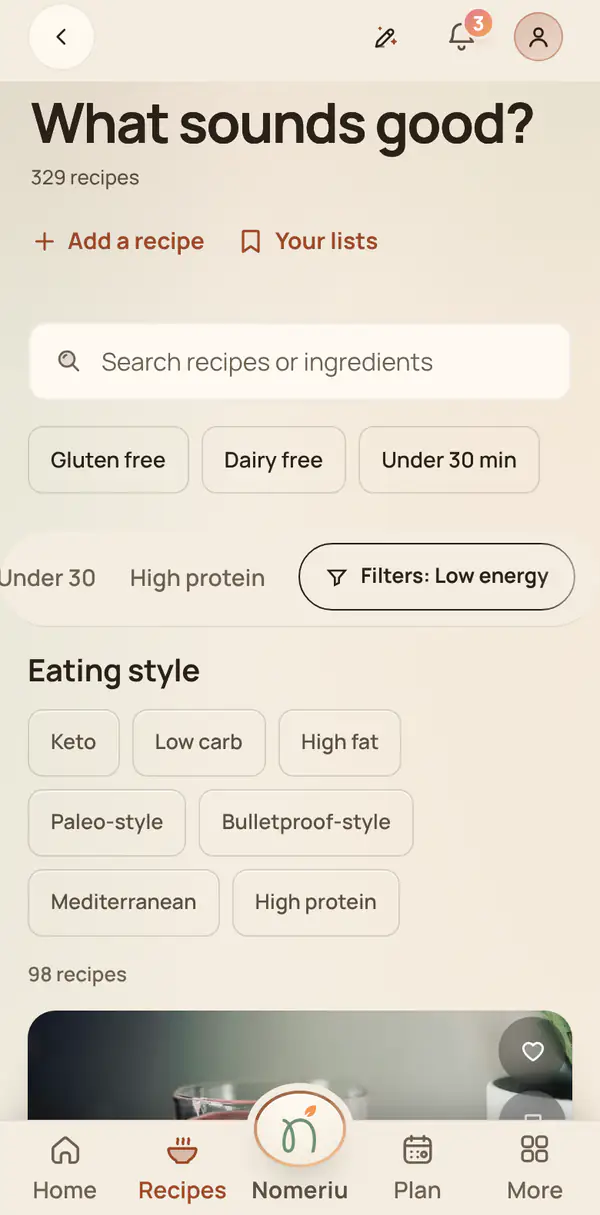
See what Nomeriu plans for this kind of week: low energy.