 nom

In short
Eat regularly, put a bigger portion of starchy food on busy training days and a smaller one on rest days, and keep a snack you like within reach before a session. The NHS recommends at least 150 minutes of moderate activity a week. No special products are needed; ordinary meals planned ahead do the job.
Training and appetite
The NHS guidelines for adults say to do some type of physical activity every day, and to aim for at least 150 minutes of moderate intensity activity a week, or 75 minutes of vigorous activity, spread across four to five days or every day. They also suggest strengthening activities that work all the major muscle groups on at least two days a week.
The HSE has advice on how to increase activity levels. They say anyone can get active and it is never too late to start, that short sessions count, and that you can reach 2.5 hours a week by doing ten minutes at a time. They also say to choose activities you enjoy, and to be kind to yourself, because everyone has bad days when they might not do all of an activity.
That last point matters for food as much as for training. A week where the sessions did not happen is a week where appetite and routine have moved around, and the sensible response is to eat regularly rather than to read a missed session as a missed day of eating.
Carbohydrate and the fuel question
The British Dietetic Association's fact sheet on carbohydrates says these foods are a key nutrient along with protein and fat, and that foods containing carbohydrates also give you energy, vitamins, minerals and fibre. They note that complex or starchy carbohydrates such as oats, barley, quinoa, brown rice and potatoes take longer to break down, which they link to a more gradual rise in blood sugar levels.
The same fact sheet gives a simple portion guide: generally the size of your fist is an appropriate meal time portion for carbohydrate containing foods, and it can be adjusted depending on your activity levels. They also say dietary recommendations suggest no more than 5 per cent of your total energy comes from free or added sugars, around 30g a day for the average adult, and that fruit juice and smoothies should be limited to 150ml a day.
So the useful part of the advice is not a list of sports foods. It is a bigger portion of starchy food on a busy training day, and a smaller one on a rest day, with the rest of the plate filled the same way.
Snacks around a session
The British Dietetic Association's fact sheet on healthy snacks says that snacks provide energy for your activities through the day and can contribute valuable nutrients such as vitamins, minerals, protein and fibre. Their suggestions include carrot, pepper or cucumber sticks with hummus, chopped melon or pineapple, a small bowl of wholegrain cereal with milk, two rice cakes with hummus or soft cheese, a hard boiled egg, apple slices with nut butter, and a small handful of mixed nuts.
The same sheet has some ordinary advice about why you are eating. They suggest having a drink first, because thirst can be mistaken for hunger, and they suggest thinking about whether you are hungry or whether you are about to train. They also recommend keeping the better options where you can see them, with fruit on the counter and yoghurt at the front of the fridge.
Timing is personal and there is no rule that fits everyone. The version that works is having a snack you like within reach before a session, rather than deciding what to eat in the last ten minutes before you leave the house.
After the session
The NHS says strength training or yoga can help build muscle and increase appetite, and that exercise can also improve your appetite. They also say that if you have not exercised for some time, or if you have medical conditions or concerns, you should speak to your GP first, and to make sure the activity and its intensity suit your fitness.
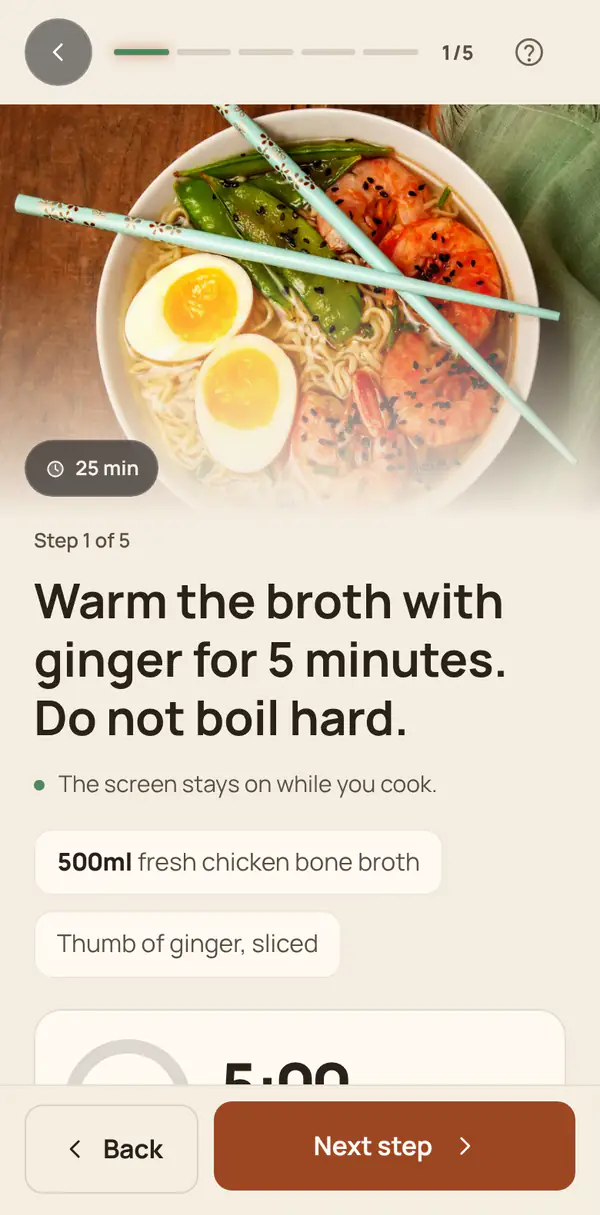
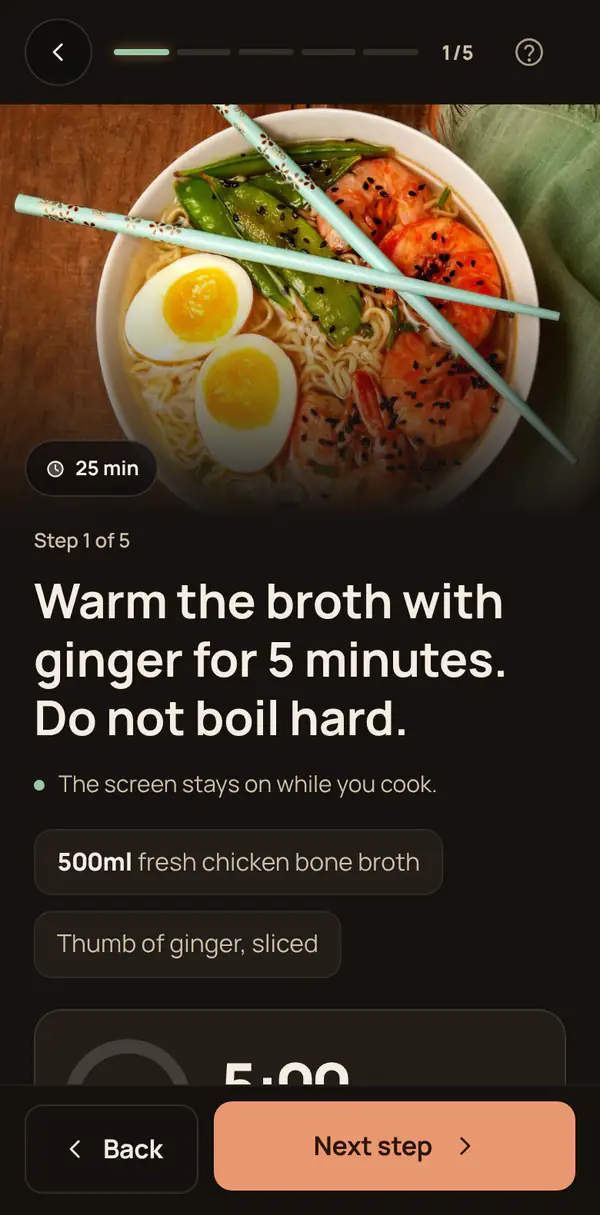
Afterwards, the cooking matters more than the timing. Cook mode in Nomeriu walks you through a recipe one step at a time in large text, with a timer where a step needs one, which is what a tired evening after training needs. The recipes come with time, servings and per serving nutrition, so you can see before you start what a meal involves.
Everything in Nomeriu stays on your device. Nomeriu is not medical advice, and it is not a sports nutrition plan. If you are training hard, or if you have a medical condition or take regular medication, talk to your GP or a sports dietitian about what is right for you.
Questions
Do I need protein shakes?
Nothing in the NHS or BDA advice used here needs a special product. Ordinary meals and snacks with some protein in each, planned ahead, cover most training weeks. A sports dietitian can advise on more.
Sources
- NHS: Physical activity guidelines for adults aged 19 to 64 The weekly activity guidelines, the strengthening recommendation and the advice to speak to a GP before starting.
- HSE: How to increase your activity levels Short sessions counting, spreading activity through the week and their advice about bad days.
- BDA: Carbohydrates Starchy and complex carbohydrates, the fist sized portion guide and the advice on added sugars and juice.
- BDA: Healthy snacks Snack ideas, keeping good options visible and thinking about the reason you are eating.
- NHS: Healthy ways to gain weight Their point that strength training or yoga can help build muscle and increase appetite.
See what Nomeriu plans for this kind of week: training.